
Author Archives: David

Know When to Let Go

Unknown

Every hunt has a moment that forces you to make a decision. Do I follow the path or make my own? Do I let the arrow fly or hold on for a better shot? We make hundreds of decisions every day, and some of the hardest can be whether to seize a moment or just let go.

We all get snagged on thorns now and again. I was recently consulting with a team and out of the blue, one of the guys violently rejected an idea we were discussing. This was a moment where the room got tense, and it felt like a confrontation was unavoidable. But just as quickly, and as if the entire room let out a deep breath, we all let it go.

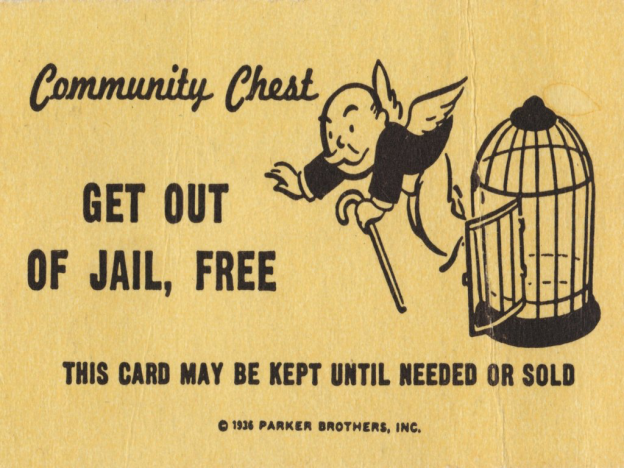
Not every shot is worth the loss of an arrow.   Just like in Monopoly, this guy needed his “get out of jail free” card and the group almost instinctively gave it to him. He came up to me afterwards to say thanks and I just simply said, “Let it go, we all did.” I know of companies that give “get out of jail free” cards to employees to inspire creativity and boost productivity.

Take a quick replay of your last few weeks. Were there moments when letting go would have worked better toward hitting your targets? When a “get out of jail free” card would have reduced your stress and opened your mind? Let go of the moments that do not serve your purpose.

Sometimes it is easier to think that the strength is in the fight. But finding the strength to let go is easier than you might imagine. Let go of battles that end in discord, let go of uncomfortable memories, let go of the arrows you might have lost. Letting go gives you the freedom to be ready for the pivot in your hunt for the things you want most.

How to Frame for a Successful Hunt

Framing is the art of first learning the pain points or desired outcomes of your audience and then showing or framing how a core competency or unique ability you have can deliver the solution. How you frame an issue influences how others see it and focuses their attention on particular aspects of it. Framing is the essence of targeting a communication to a specific audience.

In a meeting a while back, a prospective vendor came by to sell my company on his services. He rambled on about how awesome his company is at what they do. Thirty minutes passed, and he hadn’t let anyone from our team say a word. He never asked one single question about our company, what’s working and what’s not, what pain points we might have. We had a hard stop, so unfortunately for him, the meeting ended there.

This sales guy had it all wrong. If, from the start, he had simply asked a few key questions (or done his homework), he could have framed their core competencies to answer our needs. He did not consider that by fulfilling our company’s needs, he would have fulfilled his own and likely made the sale.

Here are a few pointers for framing any topic to your specific audience:

Step 1: Get curious. Ask questions and listen to the answers. Most often, the information you need to construct the frame can be found by paying attention to the clues your audience gives you.

Step 2: See the situation from the other side of the table. What does that person (company, prospective employer) need that you can provide?

Step 3: Frame your message to fulfill your audience’s needs. Think in terms of what you can do for them and how, together, you can create greatness.

Once you start framing, you will find it becomes second nature. Framing works with kids, spouses, partners, at work, at play, at home. Look at political messages and advertising. Which frames work? Which frames don’t? The more you observe, the better you will be able to construct your own. Then use your frames to highlight the picture you are presenting and you will find more targets coming into range.

Simple strategies for a more successful hunt

Have you ever noticed the world seems to be made up of two kinds of people? I don’t mean hunters and non-hunters, I mean the big picture people and the detail people. Knowing how your mind works and assessing those around you can be a huge asset when going into any meeting, negotiation or even walking into your home at the end of each day.

The best teams have a pairing of these complementary styles, the very definition of a symbiotic relationship, where each person benefits from the gifts of the other. We see this constantly happen in nature, as with ostriches and zebras, pairing up to enhance their deficient senses and avoid predators. The same holds true for humans, we can find in others what we lack ourselves and be stronger and more successful together.

Big picture people tend to be creative, strategic and visionary, but they can also be disorganized, forgetful and messy. They need to see the end game before getting dragged down into details. I’m big picture all the way, but I love to dig into the granular once I can “see” how it’s going to come together. You often find that the CEO in a company is a big picture person.

Details people are conscientious, exacting and empathetic, but can lack perspective. They need to dig into the detail before assembling the big picture. Details people are often in COO or CFO positions, checking the boxes of daily operations and balancing gains and losses, essential skills to have on any great team.

Here are a few traits of Big Picture and Details Thinkers:

Big Picture Thinkers:

  • Quickly see patterns in complex problems
  • Come up with new ideas and new projects
  • Are great at outlining what needs to be done, but exhausted by filling in detail

Details Thinkers:

  • Think about things in great detail
  • Notice body language and recognize other people’s feelings
  • Prefer to edit an existing plan than create a new one

As humans and hunters, we are always seeking balance, whether in the deer population or our own lives. When building teams, I look for others with the traits I am lacking. Nature is a big proponent of symmetry, so the best teams have a balance of each type of thinker, creating a complimentary tribe that hunts together beautifully.

How to improve every conversation by understanding filters

We all have that one story that kills.  The one you can whip out at a dull party and immediately get people livened up and talking to one another.  But then, every once in a while, old faithful fails and you cannot figure out why.   Figuring out the “why” and understanding the filters of your audience will increase your success in communicating your ideas, putting you on a better trail for hitting your targets.

We all have filters.  The same thing stopping my mother from hearing anything other than the bad grammar used during a particularity robust retelling of an event is the same thing stopping any audience from grasping the meaning of your story.  Filters come from life experience, language usage or even emotional context.

Understanding filters means looking at the world through different eyes and using the “above & clear” hunting skills you’ve been practicing.  Here are some quick spotting tricks for figuring out an audience on the fly:

Visual: People who take in information best via sight use words like “I can’t picture what you’re saying” or “I see your plan.”  Now you know to use visual storytelling and paint the scene for them.  My father is extraordinarily visual, when we work together on a project, I sometimes physically draw an idea so he can literally “see” what I am talking about.

Auditory: People who are auditory get hung up on specific words.  As I noted above, my English-major, author, auditory mom hates bad grammar and mispronunciation.  In knowing that, I usually (I mean, I’m human) try to mind my words around her because the minute she hears it, a block comes up and stops our communication.  Not to generalize, but more women have auditory filters.  They will say: “Are you tuned in?” and tend to look off, breaking eye contact when you hit a block.  Be very mindful of tone and language with auditory people and use words that speak to them: hear, listen, sound, etc.

Kinesthetic/Feel: Feel people need to feel things, both literally and emotionally.  My brother, my partner and the smartest real estate mind I know, often uses feel to his advantage.  Much like many world-class negotiators, he needs to feel a deal, rather than see it; and he isn’t afraid to walk away if it feels wrong.  He learns through doing and will often say things like “my gut is telling me” or “I know in my heart.” Add physicality to your story and explain tense moments with phrases like “my back was to the wall.” 

Try these tips out at home or the office.  Start small with a test group.  Take notes and refer to them before meetings so that you can tailor your communication to your audience’s filters.  Remember, the meaning of communication is the response you get.  Make sure your message is getting through those filters and hitting the bull’s eye.

We Exist; Therefore, We Hunt

I could write endlessly about my love for America. We are incredibly fortunate to live in a country that grants its citizens the freedom to be authentic and hunt down their goals without interference. Nothing exemplifies that more than last week’s Supreme Court ruling on marriage equality.

Now, I can imagine what you might be thinking. But know this: the Declaration of Independence states: “We hold these truths to be self-evident, that all Men are created equal, that they are endowed by their Creator with certain unalienable rights, that among these are Life, Liberty and the Pursuit of Happiness…” As much as I love hunting, the Second Amendment and the Bill of Rights, I always return to that line. That the pursuit of happiness, the right to go after what you want is indoctrinated into our lives just by the right of creation. We exist; therefore, we hunt.

Americans are hunters. We adapt and evolve as times change. We can see an injustice and pivot to correct it. My sons will never remember a time when people in love could not get married. That is America, baby! That is what this is all about: real-time execution, pivoting and taking down that target.

It is one of my life’s goals to elevate the idea of hunting from simply putting food on the table to a life lived to its fullest. And as hunters, my fellow Americans, we must respect the right of others to hunt down the targets they want most in life, whether or not we agree with them. Happiness is happiness; love is love. Have a great Fourth of July and celebrate your hunt!

Live your Life in the Present

Just a few days ago, I traveled to Orlando to attend a conference. I arrived mid-afternoon and found myself out of a dreary Michigan “summer;” suddenly poolside on a 90-degree Florida day with the sun on fire. The water temperature was perfect, and there wasn’t a cloud in sight. It was an incredible out-of-time moment.

Not a minute later, I turned to a couple of my colleagues from HealthRise and said “Wouldn’t it be better if…” and then I stopped myself mid-sentence. What just happened? I asked myself.   There I was, second-guessing a perfect slice of time.

Over the years, I have learned the curse that lies in talking about what you wish or want something to be. When we say or even think about what could be better or what isn’t right, we are laying a trap in which we can’t help but get caught. Whether you’re in the meeting of your life, entertaining clients or hanging with your kids, you must stay present.

Being present means catching those “I wish” or “I want” moments and crushing them before they take hold. Being present means seeing the happiness a popsicle brings to my boys and not worrying about those sticky purple hands. Being present means you can take each moment as it comes without anticipating what the next will bring. And I know it’s a cliché, but to quote Kung Fu Panda: “Today is a gift, that’s why it’s called the present.”

As my experience suggests, this is not a perfect science. Sometimes your mind will go off on a “what if” scenario. When it happens (and it will), your practice of being present will be the thing pulling you back to the moment where your attention needs to be. Over time, you will get better and better at “staying awake” and putting yourself back in the hunt.

When you are awake and aware and in the moment, you are prepared to hunt down whatever you are after; targets become clearer, and life becomes Technicolor. When you are present, every detail of every moment crystallizes instantaneously, food tastes better; the sun shines brighter. And you get to live every day like a hunter; senses enhanced and ready to hit your targets.